

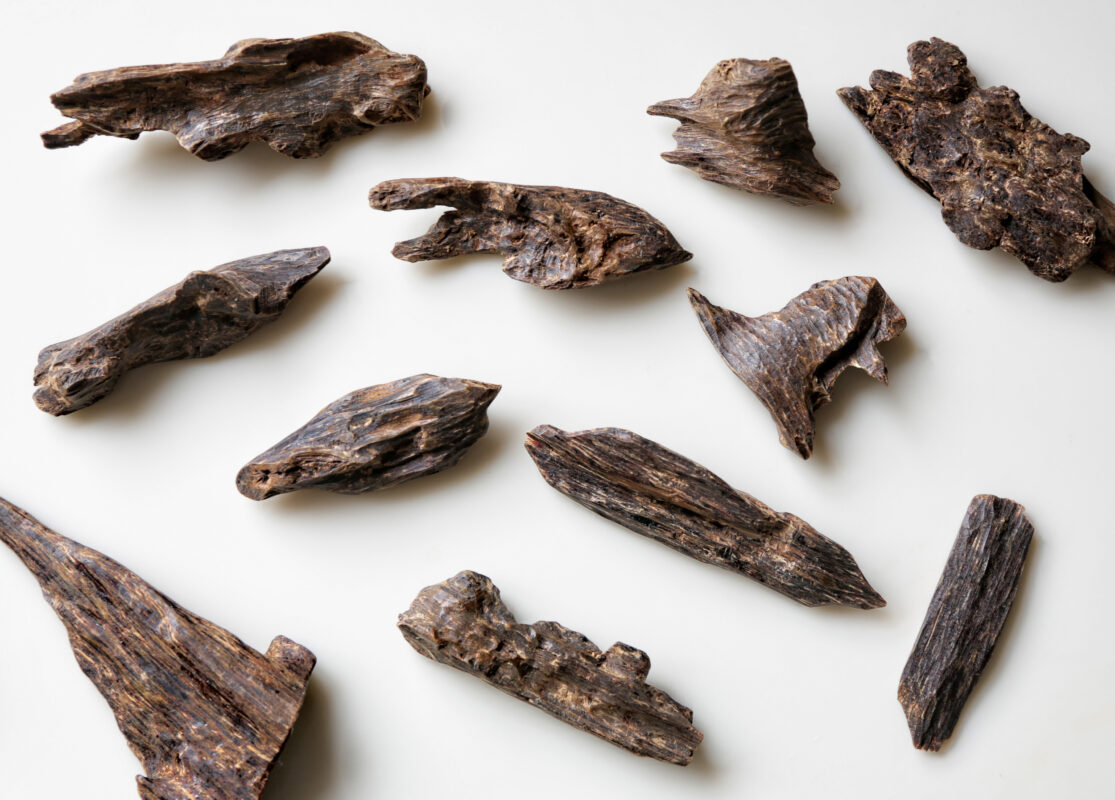
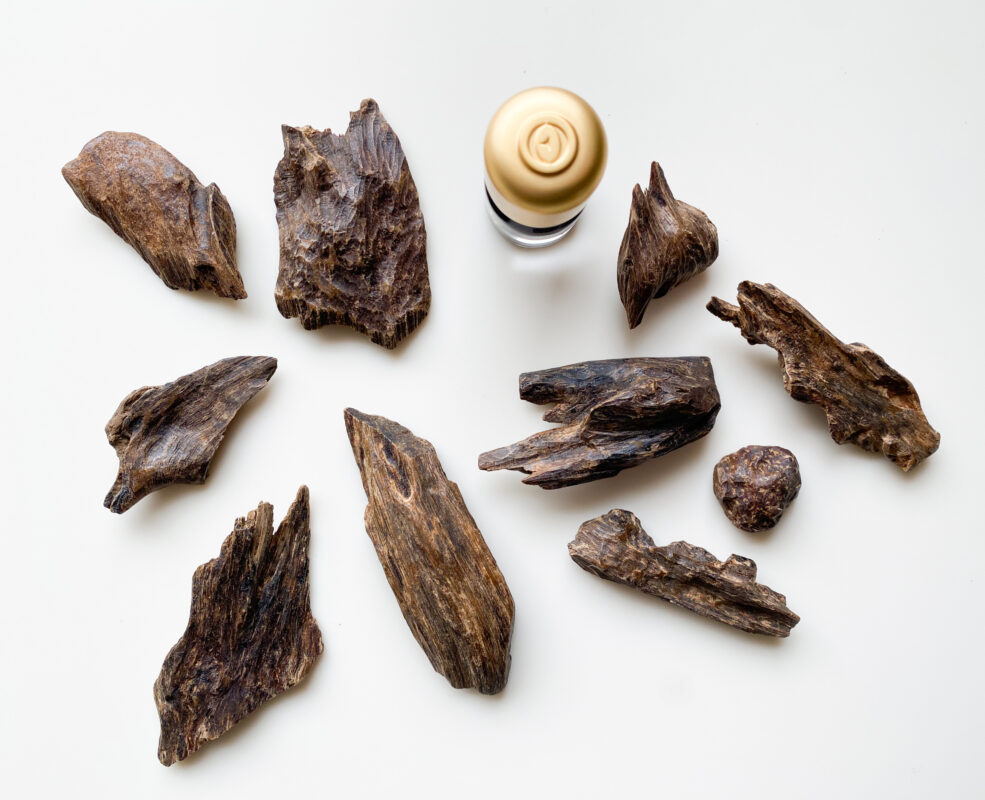
This is Cambodian agarwood from a bygone era. The scent is sublime and each piece feels like you’re handling an artifact that belongs in a museum.
We can’t date the harvest exactly, but it goes back to circa 1970, making these some of the oldest and rarest oud chips available anywhere..
Agarwood like this hasn’t come from Cambodian jungles for half a century. The 1950s to 1970s were the golden years of Cambodian oud, after which the curve starts to slope down and down until the late seventies / early eighties when you see the flat line that has stayed with us till this day.
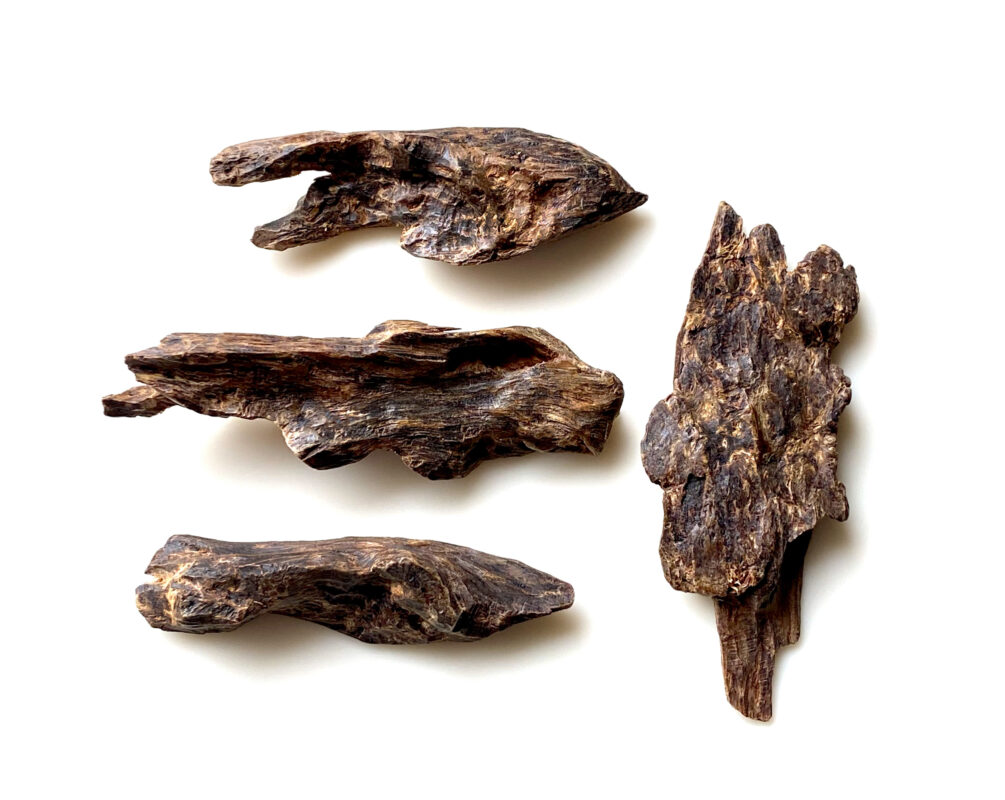
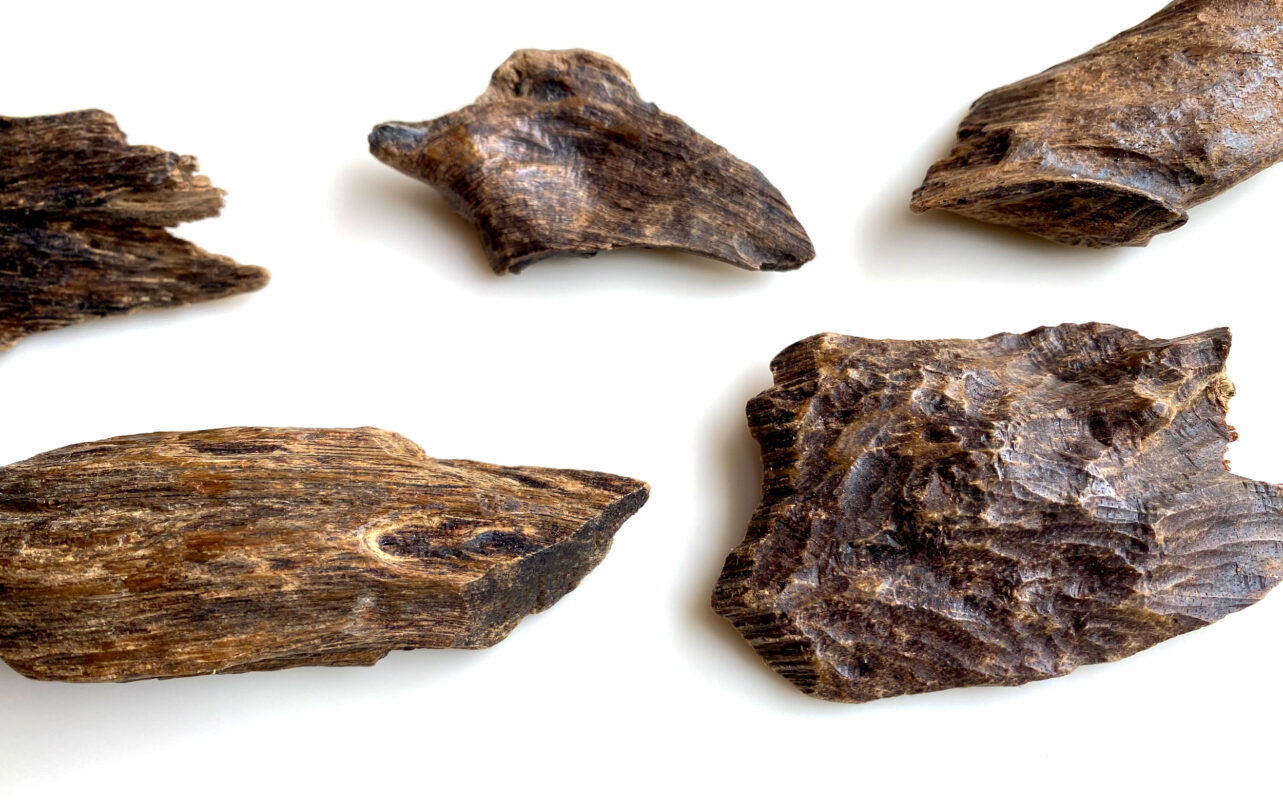
You may have heard of such oud, read about the legendary harvests that gave Cambodia its renown, the incredible red, spicy aroma of vintage Cambodi agarwood – yet, you rarely, if ever, see even a picture of the wood people talk about. It’s almost entirely anecdotal, memories collected from veteran distillers who reminisce about the pieces they once owned and stories from old-timers you meet in Koh Kong who have been mostly dealing in lue (early-stage resination) for the past twenty years.
Each piece is a rock-solid mass of resin – dense, hard resin. The pieces have been pristinely chiseled to leave only a uniform grade of resin, with no trace of kyen or anything but the solid chunk of hard oud. In the China Market, these pieces would likely not even be carved, but be adorned as ultra-luxury pendants or display pieces.
We’ve kept the pieces stored in an air-tight glass jar. The ambient aroma, especially when you open the jar and take a whiff, is out of this world – the air suddenly smells so thick and sweet you could taste it.
Heated, instead of a piercing green, the scent is warm and creamy sweet. A gentle bitter-red tinge, a subtle layer of earthy-spice, the aroma is the olfactory equivalent of liqueur in its texture.
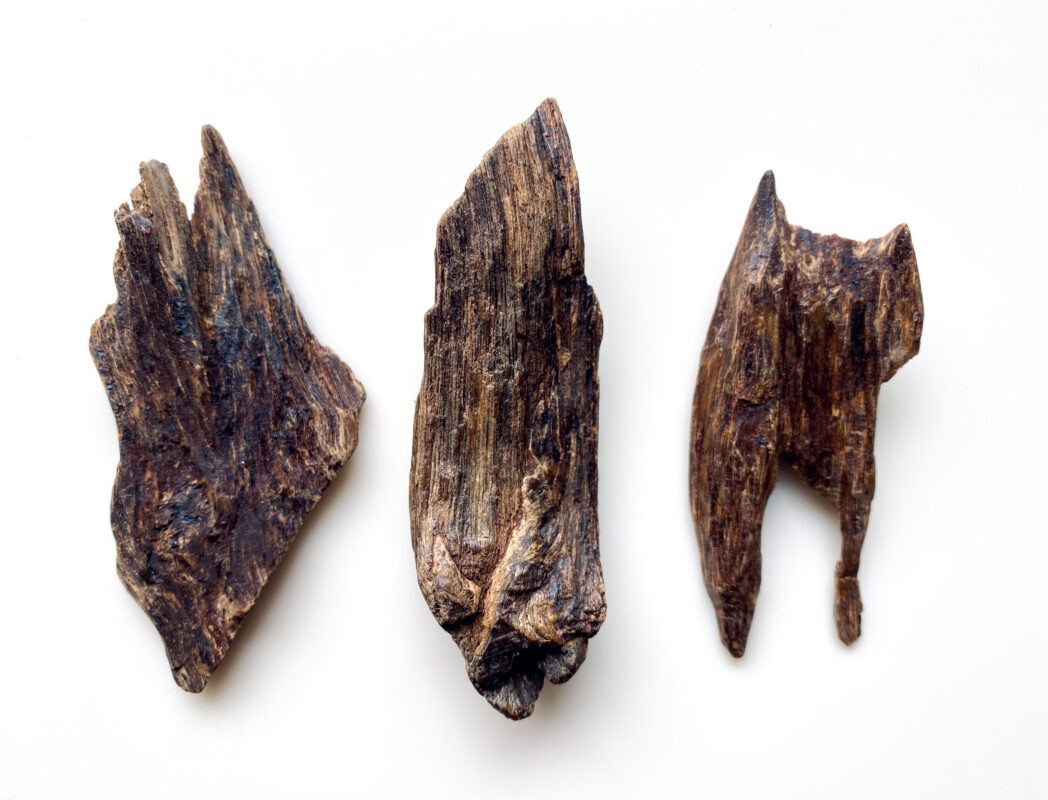
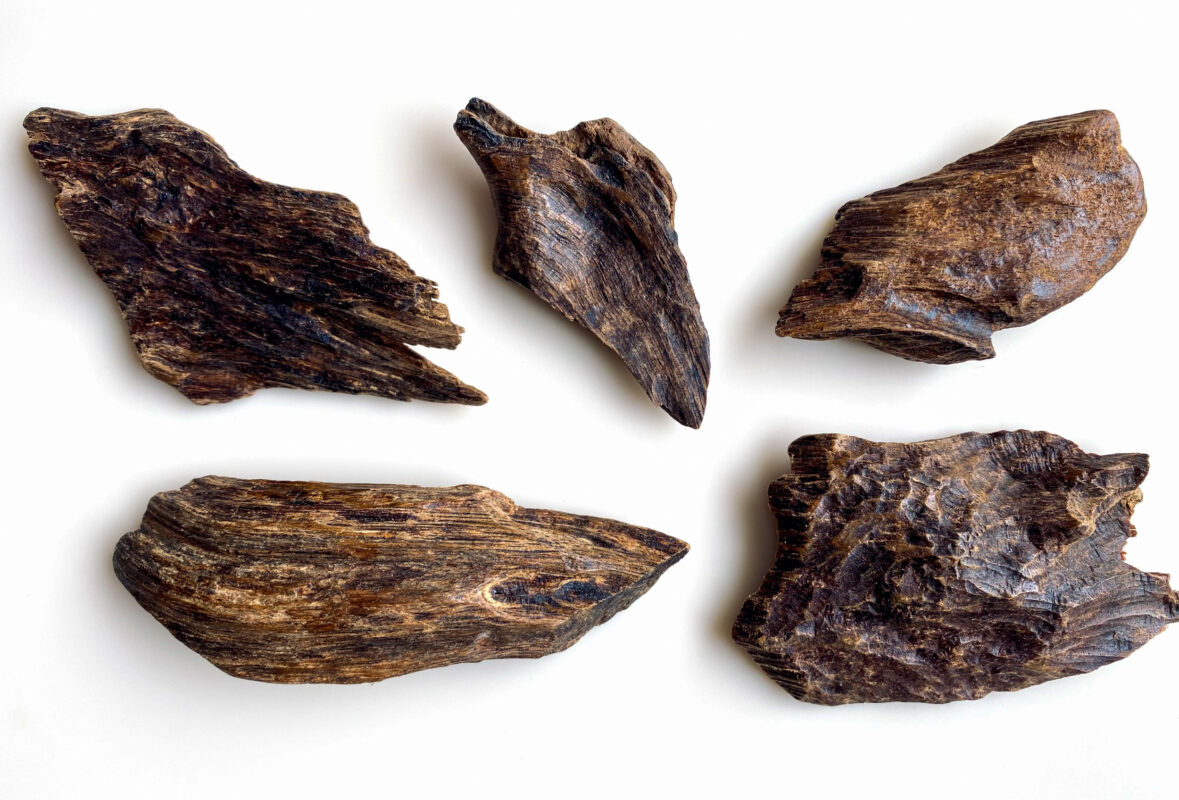
What makes this a great burn is that, unlike soft-resin alternatives, you can heat the Vintage Cambodi pieces at any temperature, low through high. In fact, despite its perfect kodo-value, these would have been heated on high-temp on charcoal back in the day. The low-heat kodo-experience only adds to the aromatic nuances this vintage resin has to offer. And because it’s proper hard resin, you can expect a longer burn compared to most other oud chips.
The best would be join between both worlds: start off low-temperature (on an electric burner or charcoal that’s been left to cool a bit, or mica plates stacked on the charcoal to reduce direct heat exposure) and once you’ve enjoyed the subtle nuances, you crank up the heat to squeeze out all the wood has to give.
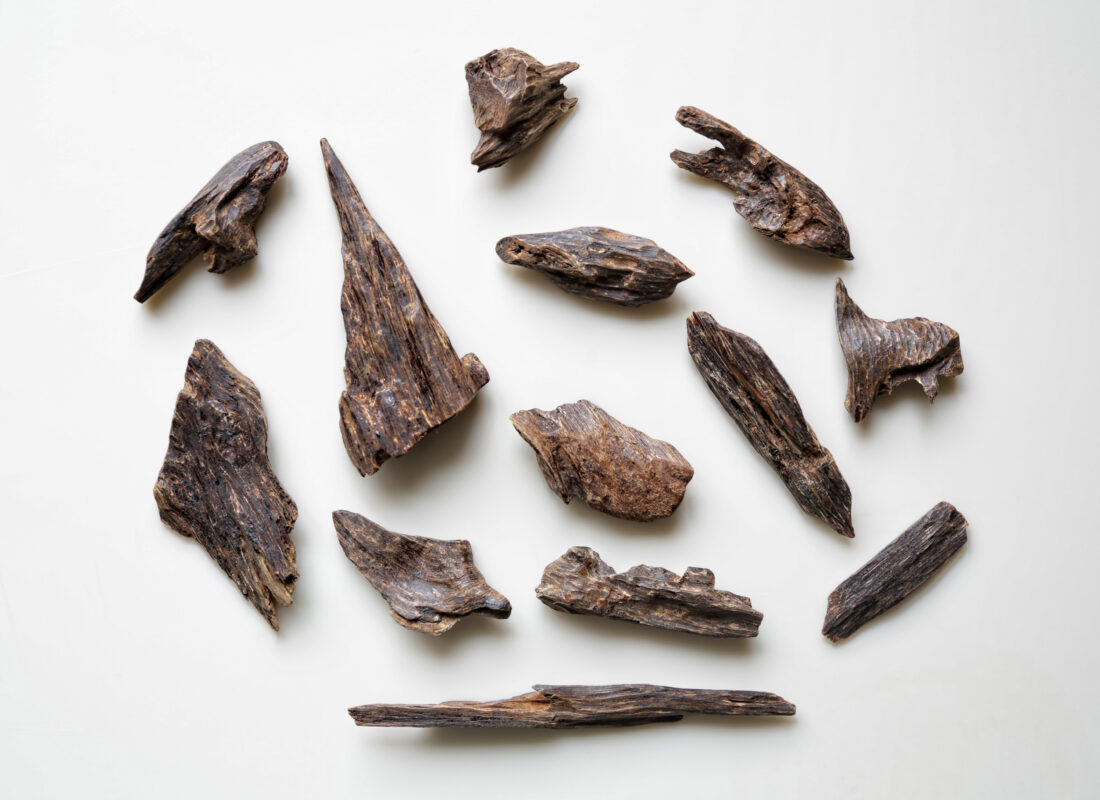

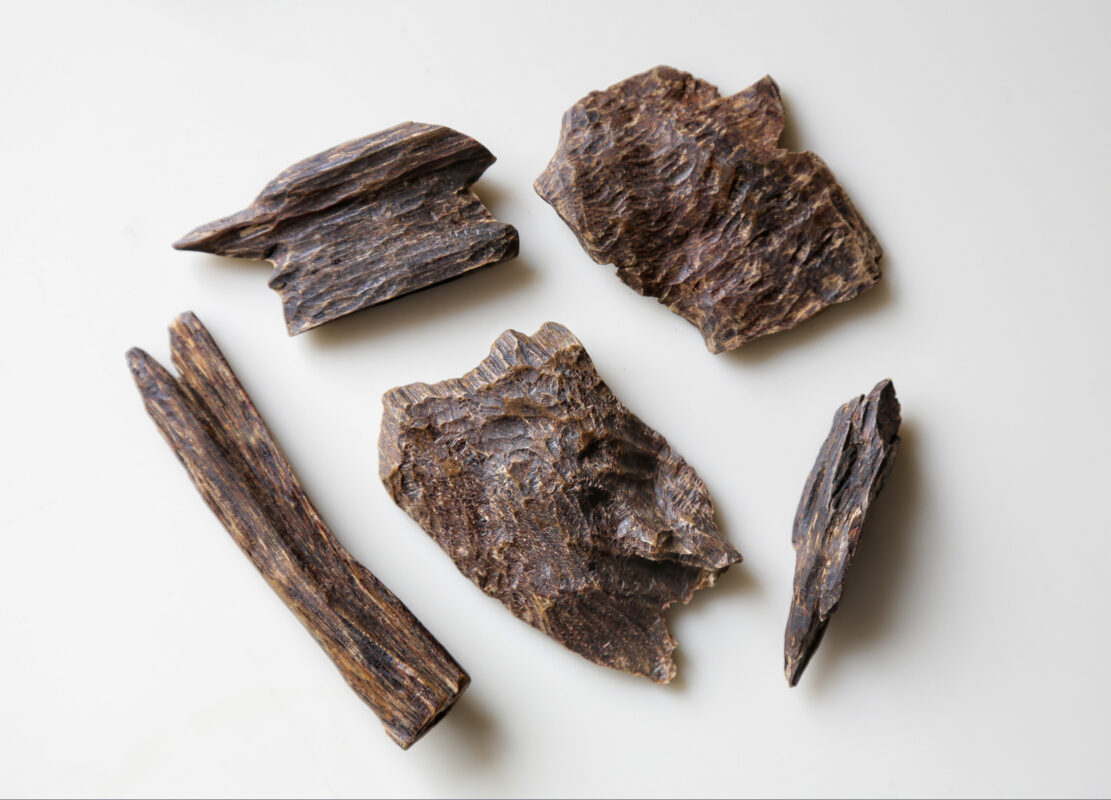


CUSTOMER REVIEWS
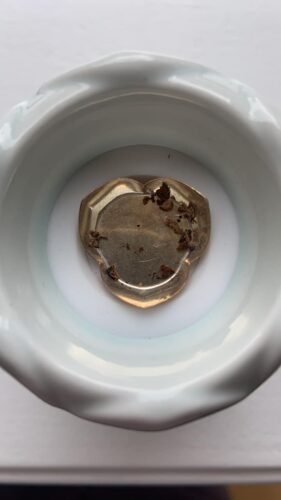
I could spend hours talking about how heating raw woods has totally deepened my appreciation for agarwood in all its forms, but I’ll save that for another post; for now, a review of Vintage Cambodi.
The first notes emerge as early as 60 degrees, and a comparison to kombucha comes to mind.
Tart and tangy, some zesty red fruits and a tea note greet you.
At ~120 you begin to receive some creamy elements, making me think of the heart notes in oils like Chenla and Royal Kinam.
The feeling is very warm, inviting, happy.
The olfactory texture is very smooth-woody, like an aged whiskey. The beginnings of nutty notes are peeking through. At ~160 the creamy-nutty profile is in full bloom, and I feel at this point as if the wood is singing.
The profile is on full display and is very complex. Hard to describe in any meaningful way, but very beautiful in its red warmth and sweetness. Above 200 you feel as if the profile is being gently toasted. The red Cambodian profile puts on a brown coat and feels like a warm sunset.
Related products

Oud Wood

Oud Wood

Oud Wood